The author
Dan Herbatschek
Writer, strategist, and technologist
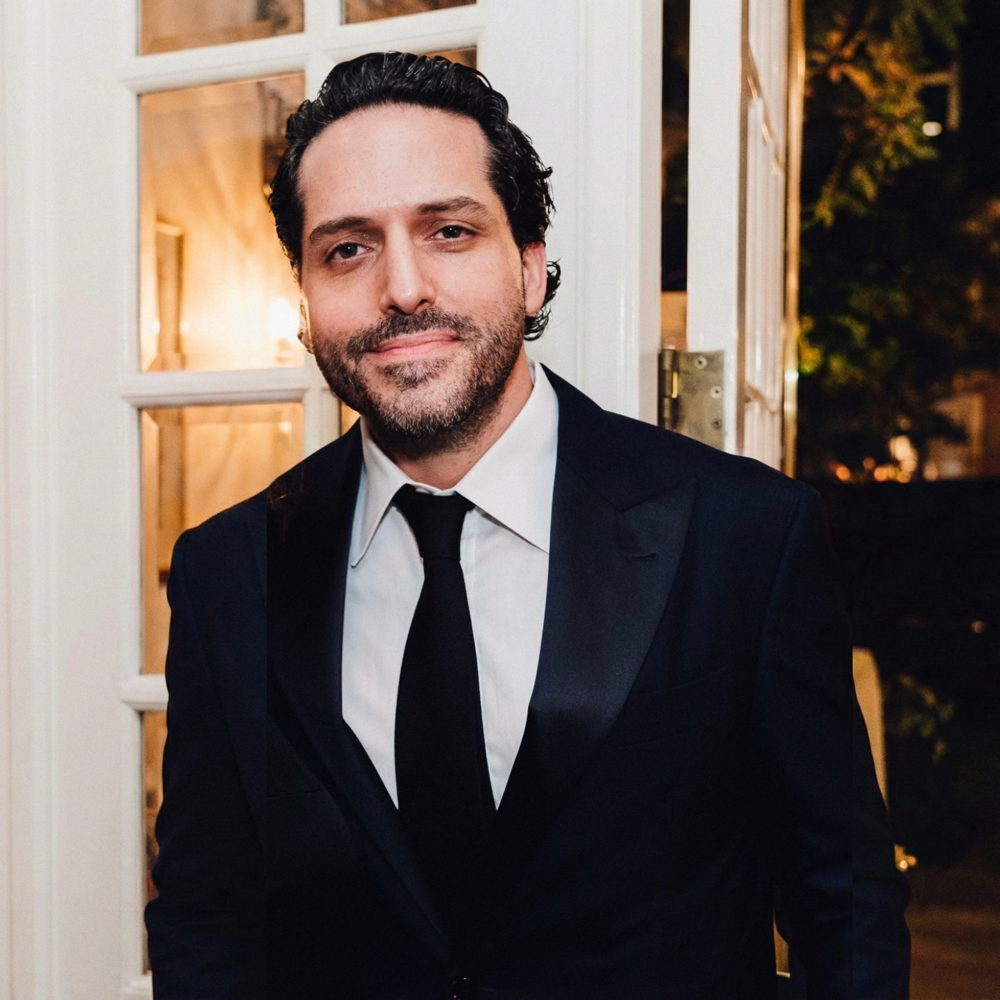
Biography
Dan Herbatschek is a technology leader and applied mathematician who writes on the future of intelligent systems, enterprise AI governance, and the structural decisions shaping the next decade of technology. Through The Predictive Present, he publishes forward-looking analysis and frameworks aimed at executives, founders, and policymakers navigating AI adoption, data strategy, and organizational transformation. Where his Open Mind blog looks backward at the history of ideas, The Predictive Present looks forward—examining how mathematical thinking, governance structures, and systems design will determine which organizations thrive in an AI-driven economy. Dan is the Founder and CEO of Ramsey Theory Group and a Columbia University graduate whose academic foundation in mathematics and philosophy of science informs his perspective on responsible technology leadership.
The Predictive Present is his first book. It draws on more than a decade of thinking about how the tools we build to manage time, language, and knowledge end up managing us in return.
He lives and works in the New York metropolitan area.
From the author
Why I wrote this book
I’ve spent years working at the intersection of language, technology, and strategy. Over time I began to notice that the conversations happening in AI, in data science, in platform design, and in digital governance were all circling the same set of questions — questions that were far older than any of us realized.
The dream of a predictive world didn’t begin with machine learning. It began the first time a community decided to standardize its calendar. It deepened when someone first tried to build a language free of ambiguity. It accelerated when probability became a tool for managing uncertainty rather than merely describing it.
I wrote this book because I wanted to understand — and to help others understand — the long arc that produced the particular world we now live in: a world that is always slightly ahead of itself, always refreshing, always anticipating. Not to condemn that world, but to see it clearly enough to decide what parts of it we want to keep, and what parts we might choose to change.
Background
Intellectual interests
Dan’s work is shaped by a deep interest in the places where humanistic scholarship and technical systems meet. His thinking draws on the history of linguistics and philology, the philosophy of time and measurement, the sociology of standards and classification, the political economy of data, and the intellectual history of computing.
Before writing The Predictive Present, he spent years in digital marketing and web development — building the very systems of attention, recommendation, and optimization that the book examines. That dual perspective — builder and critic — informs the book’s insistence that understanding technology requires understanding the history of the ideas that made it thinkable.
Speaking
Available for events
Dan is available for speaking engagements, panel discussions, and interviews on the themes of the book: the history of information, the politics of quantification, language and AI, the construction of temporal infrastructure, and the cultural implications of predictive systems.
For speaking inquiries: hello@predictivepresent.com
Read the book